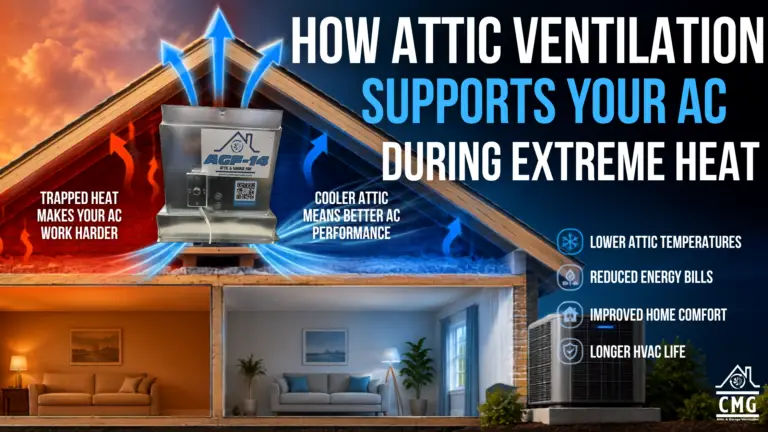
Your AC may not be broken. It may be overwhelmed. Every summer, homeowners across hot climates start asking the same questions:
“Why won’t my house cool down?”
“Why is my AC running nonstop?”
“Why are some rooms still hot?”
“Why is my electric bill so high?”
In many cases, the HVAC system itself isn’t the real problem. The real problem is happening above the ceiling.
The Hidden Heat Problem Most Homeowners Never See
During extreme summer temperatures, attic temperatures can climb well above 160°F.
That means your home isn’t just fighting the heat outside, it’s fighting trapped heat sitting directly above your living space all day long. Your attic becomes a giant heat reservoir. That heat doesn’t stay there.
It radiates downward into:
- Your insulation
- Your ductwork
- Your ceiling
- Your garage
- Your living spaces
The result? Your AC has to work significantly harder just to maintain the same indoor temperature.
Your Ductwork Is Sitting in an Oven
Most homeowners don’t realize their conditioned air travels through ductwork located inside the attic. So while your AC may be producing cold air, those ducts are often surrounded by extreme temperatures before the air even reaches your rooms.
Think about it this way:
Your AC is trying to send cool air through a 160°F environment. That heat transfer weakens cooling performance before it reaches the vents inside your home.
This is one reason homeowners experience:
- Uneven cooling
- Hot bedrooms
- Long AC run times
- Thermostat frustration
- Rising energy bills
Your HVAC system isn’t just cooling the house anymore. It’s constantly battling attic heat.
How Attic Ventilation Helps Your AC
Attic ventilation systems help reduce heat buildup by improving airflow and exhausting trapped hot air from the attic.
This helps:
- Lower attic temperatures
- Reduce heat load on ductwork
- Improve airflow conditions
- Support HVAC efficiency
- Reduce unnecessary AC strain
- Improve overall comfort consistency
- Reduce energy usage & bills
Instead of forcing your AC to fight overwhelming attic temperatures alone, ventilation helps reduce the environmental stress surrounding the system. That support becomes especially important during peak summer heat.
Your Garage May Be Making Things Worse
Attached garages are one of the biggest hidden heat contributors in many homes. Garages absorb intense heat throughout the day, especially when:
- The garage door faces west
- Vehicles are parked inside
- The garage lacks ventilation
- There’s attic access above the garage
That heat rises directly into the attic space and increases the overall heat load affecting the home.
Many homeowners notice:
- Hot rooms near the garage
- Warmer second floors
- Longer AC run times in the afternoon
- Increased discomfort in adjacent rooms
Proper garage and attic ventilation can help reduce this trapped heat before it spreads deeper into the home.
Support Your AC Before Peak Heat Hits
The longer excessive attic heat remains trapped above your ceiling, the harder your cooling system has to work every single day. Attic ventilation helps create a cooler, more manageable environment for your HVAC system to operate in during extreme summer conditions.
Cooler attic.
Better airflow.
Less strain on your system.
Stop treating the symptoms. Remove the heat above the ceiling.