
When your HVAC system is inspected, the focus is almost always on what’s visible:
the unit, the refrigerant levels, airflow at the vents, and thermostat performance.
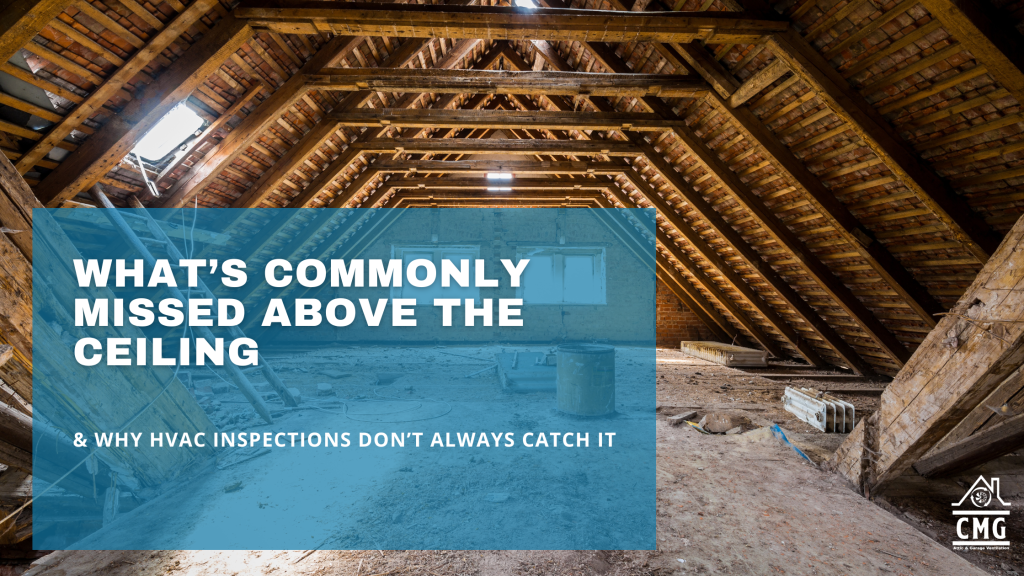
But there’s a critical area that often gets overlooked- the space above your ceiling.
Your attic plays a much larger role in comfort, efficiency, and system performance than most homeowners realize. And when it’s ignored, even a perfectly functioning HVAC system can struggle.
What’s Commonly Missed Above the Ceiling
1. Extreme Attic Temperatures
Many attics regularly reach 140–150°F during warmer months—and retain heat well into cooler seasons. That stored heat doesn’t disappear overnight.
2. Heat-Soaked Ductwork
Ducts running through a superheated attic are constantly absorbing heat. The cooled air inside them warms before it ever reaches your rooms, forcing longer AC run times.
3. Overloaded Insulation
Insulation slows heat transfer—but it can’t eliminate it. When insulation is surrounded by extreme attic heat, its effectiveness drops.
4. Uneven Home Temperatures
Hot ceilings and temperature swings from room to room are often blamed on HVAC sizing or airflow—when the real issue is heat radiating from above.
Why HVAC Inspections Don’t Always Catch This
This isn’t a failure on the contractor’s part—it’s a scope issue.
Standard HVAC inspections focus on:
- Mechanical operation
- Safety
- Airflow delivery
- System efficiency
That’s where attic ventilation enters the conversation.
Attic Ventilation: The Missing Piece
Attic ventilation doesn’t replace your HVAC system—it supports it.
By actively removing superheated air from the attic, ventilation:
- Reduces overall home heat load
- Lowers attic and ceiling temperatures
- Helps ductwork deliver cooler air
- Reduces HVAC run time and strain
- Improves comfort consistency throughout the home
This is especially critical in homes with garages beneath attic space, where heat buildup can be even more intense.
The Bottom Line
If your HVAC system checks out but your home still struggles with comfort, efficiency, or uneven temperatures—the answer may be above the ceiling.
HVAC inspections focus on the system. Attic ventilation focuses on the environment that system operates in.
When both work together, that’s when real comfort happens.
Ready to See What’s Happening Above Your Ceiling?
If you’ve never evaluated your attic heat load, now is the time.
Understanding what HVAC inspections don’t always measure could be the key to protecting your comfort—and your system—for years to come.
